Designed in Spain · Cast in Yerevan
The process: from wax to metal
Every Momique piece goes through the same hands and the same stages: drawing, model, casting, setting and finishing. A technique thousands of years old, with today’s tools.
Spain
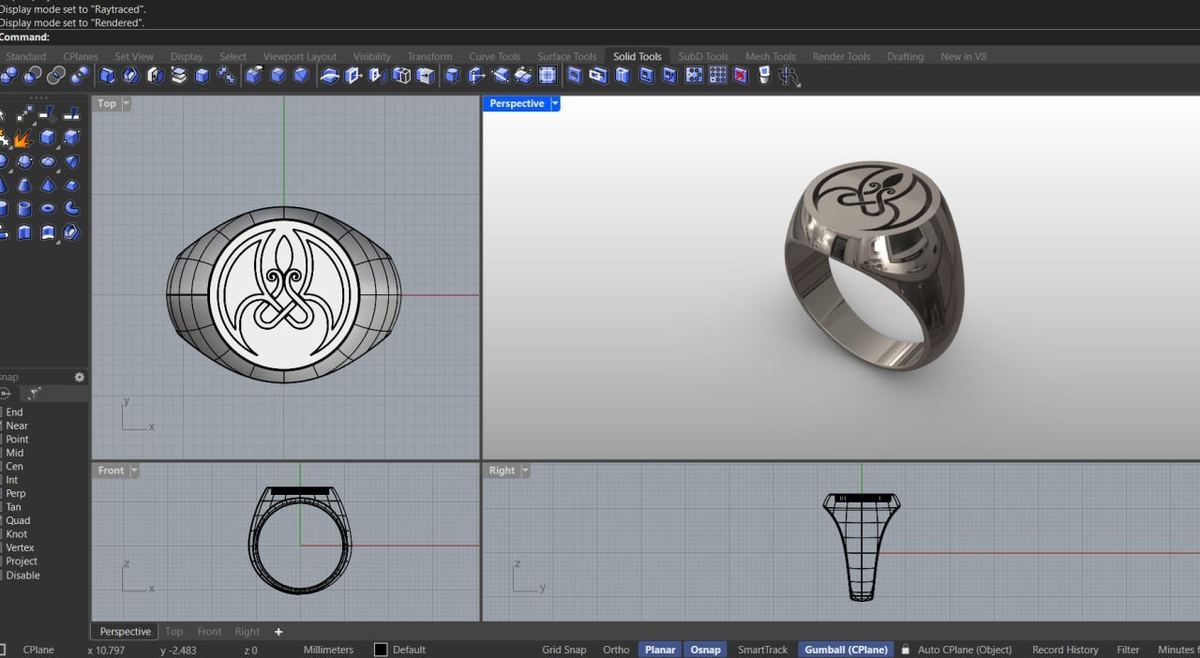
Drawing and 3D modelling
It starts with an ornament: an eternity sign carved on a khachkar, a pomegranate, a letter from a manuscript. Momik draws it and turns it into volume in 3D modelling software.
3D gives control that is almost impossible by hand: the exact thickness of an ornament line, the symmetry of an interlace, the weight of a ring before it is cast.
- Process
Spain
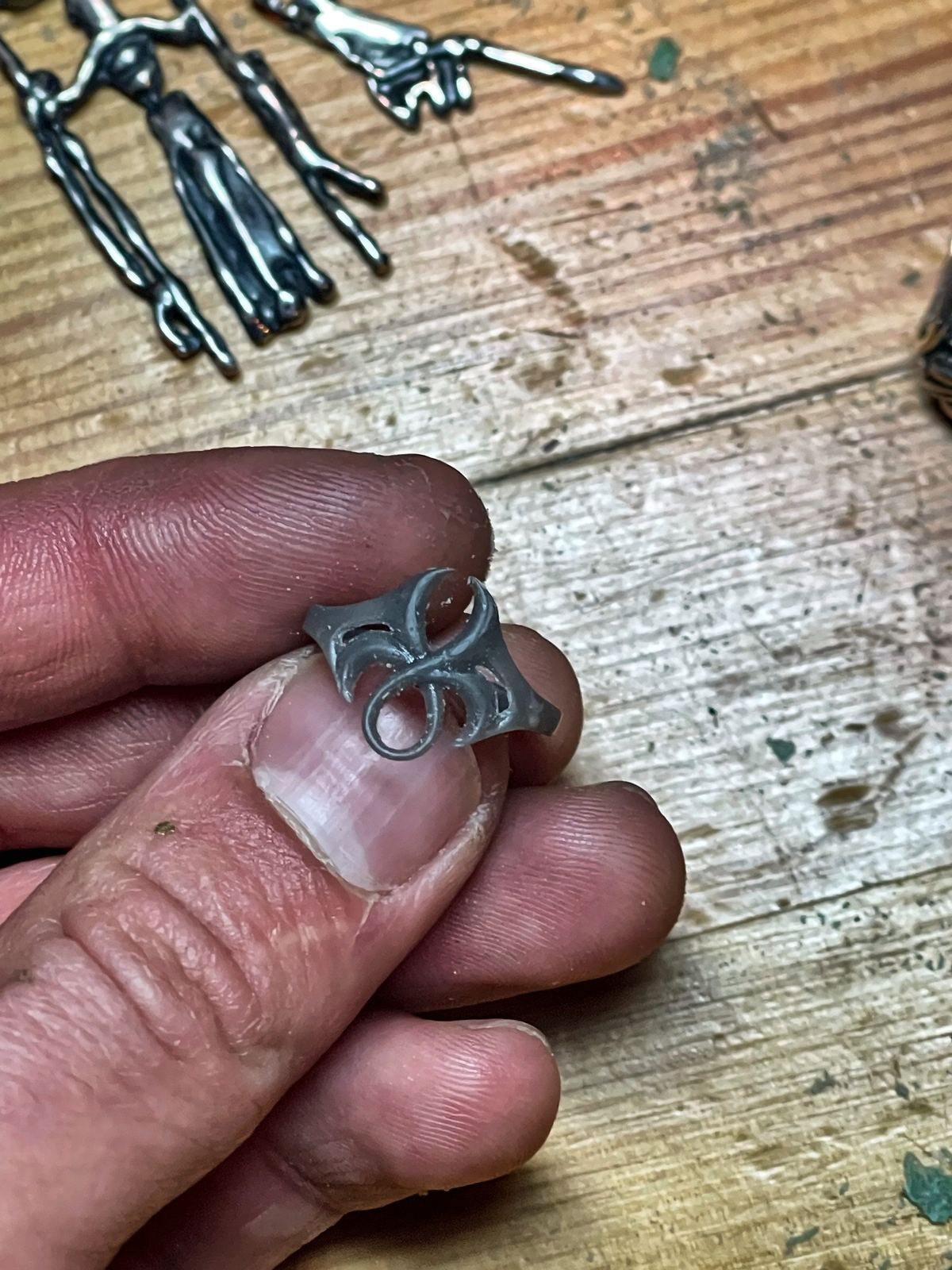
The master model
The model is printed in resin on a high-resolution 3D printer. This master is not the jewel: it is the exact form that will be reproduced in metal.
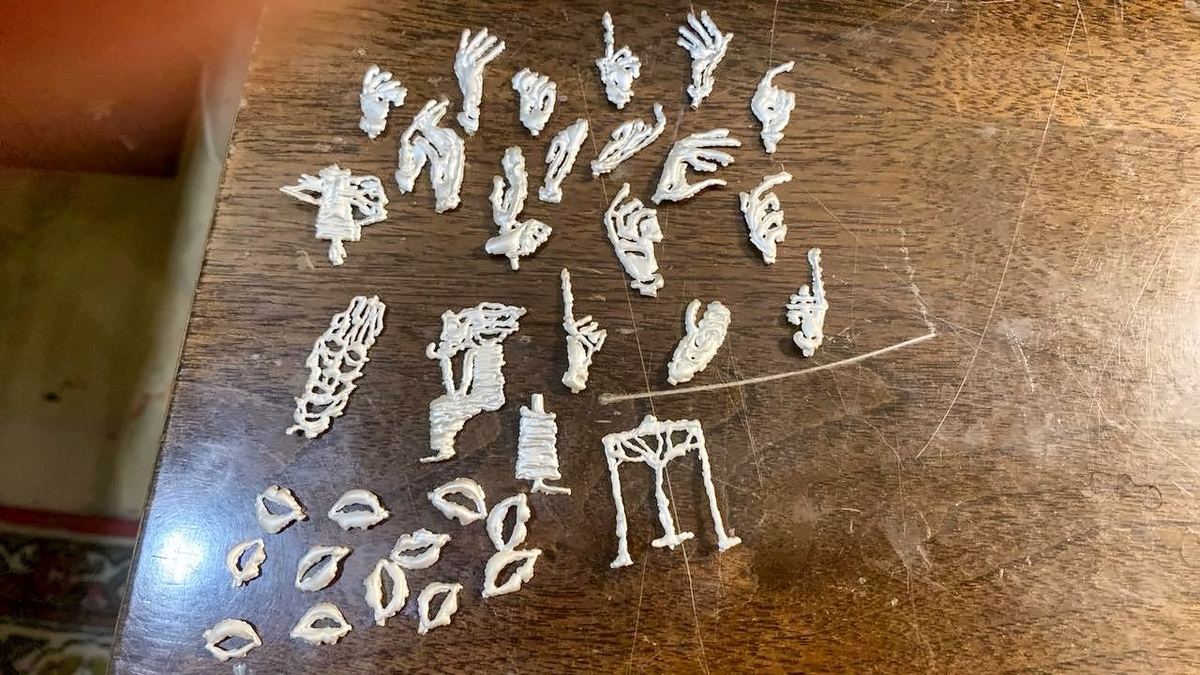
Some pieces still start as hand-carved wax, like the figures of the DavXmoM exhibition. The master then travels to Yerevan.
Yerevan
Lost-wax casting
In the family workshop the model is invested in a heat-resistant mould. Heat burns the model out (hence the name: the wax is "lost") and molten metal takes its place.
Momique casts in brass. It is the same technique used for jewellery and bronzes in antiquity.
Yerevan
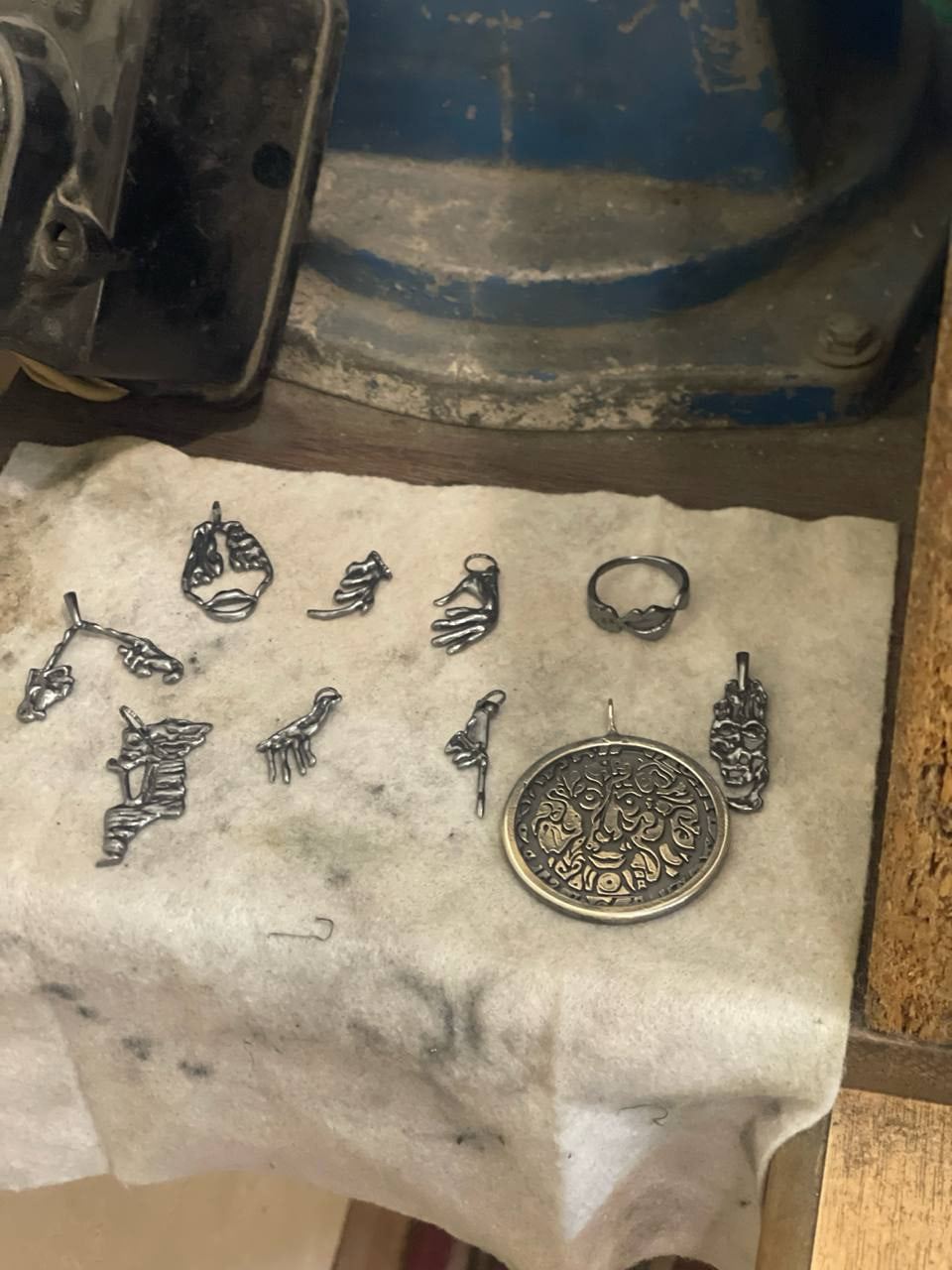
Filing, setting and finishing
The piece comes out of the mould rough. The sprues are cut, it is filed, stones are set and it is polished by hand. When the design asks for it, the metal is darkened so the ornament reads better in relief.
Every piece is checked before it travels back to Spain.


Hand-carved wax
Before 3D, and still today for sculptural pieces, the model is carved directly in wax. These are figures from the DavXmoM exhibition and the wax model of a stone-set ring.


The result
Cast metal, finished by hand, with the ornament reading in relief. The first pieces are already in the Momique line.
The Momique piecesFrequently asked questions
What is lost-wax casting?
A casting technique in which a model (wax, or castable resin) is covered in a heat-resistant mould. Heat removes the model and leaves a cavity of its exact shape, which is filled with molten metal. The mould is then broken and the piece finished by hand.
Are the 3D-printed pieces for sale?
No. 3D printing is only used to make the master model. What you receive is always cast metal, finished by hand.
Why designed in Spain and cast in Yerevan?
Momik lives and designs in Spain. Casting, setting and finishing are done by his family’s workshop in Yerevan, which has decades of experience in metalwork and metal maquettes.
How long does a piece take?
It depends on the piece and on shipping between Spain and Armenia. We give you a precise lead time when the commission is confirmed.
What metal are the pieces?
The current Momique line is cast brass. If a piece is plated or set with stones, its page says so.